
Senior surgeon review
Your case is reviewed for clinical fit before a date or package is suggested.
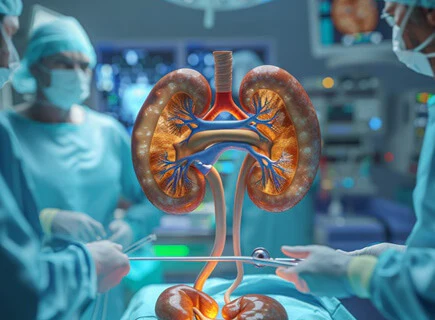
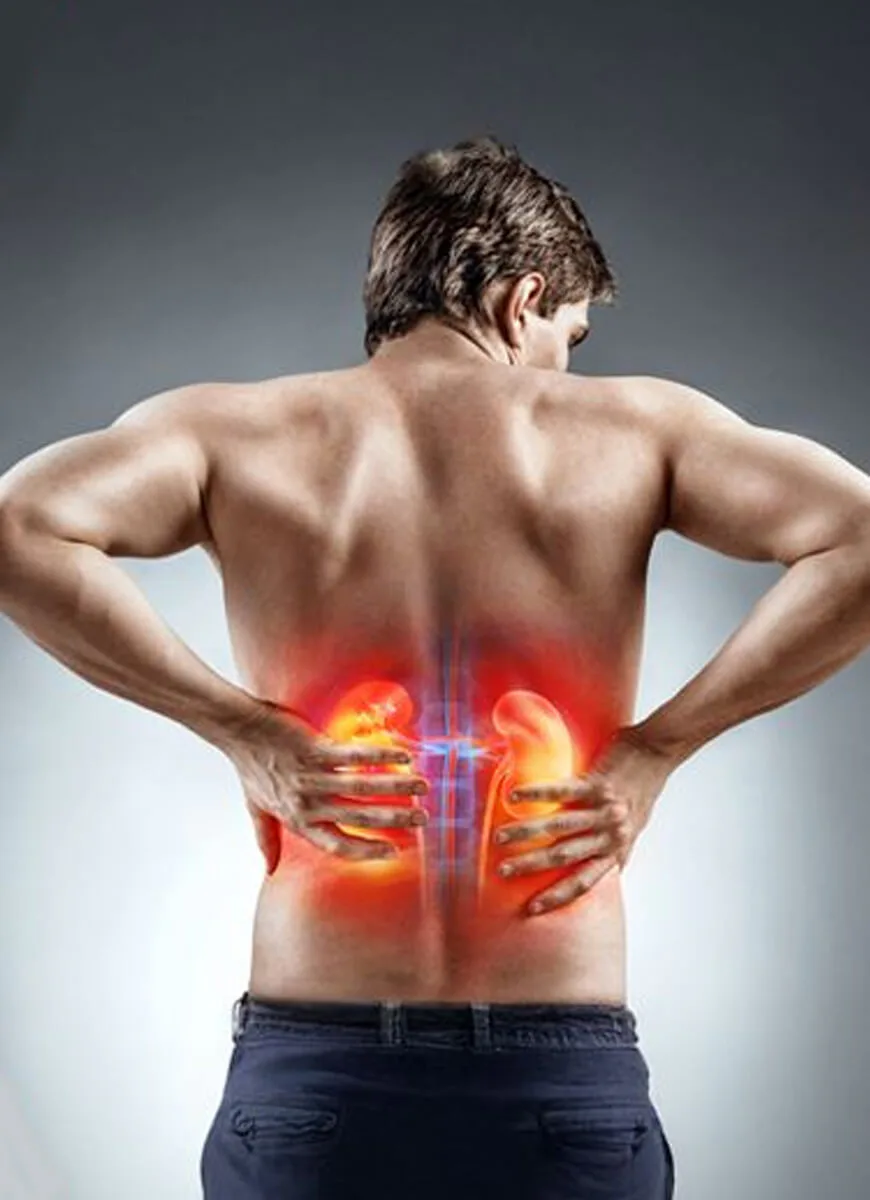
Kidney stones are hard deposits of minerals and salts that form inside the kidneys when urine becomes too concentrated. They range from tiny grains that pass out unnoticed to larger stones that block the flow of urine and trigger episodes of severe, cramping pain in the back or side. Stones are very common in India - hot weather, low water intake and dietary habits all play a part - and they tend to recur if the root cause is not corrected.
Modern laser procedures remove stones through the body's natural urinary passage, so there are no cuts, no stitches and no visible scars. In URSL (ureteroscopic lithotripsy), a thin scope reaches stones stuck in the ureter; in RIRS (retrograde intrarenal surgery), a flexible scope travels right into the kidney. A fine holmium laser fibre then breaks the stone into dust and tiny fragments, which are removed with a basket or washed out naturally in the urine over the next few days.
At Axten Hospitals, laser stone removal is performed only by experienced, specialist urologists. You receive one honest, all-inclusive price before admission - covering surgeon fees, laser charges, room, medicines and consumables - with zero surprise billing. Cashless insurance, 0% EMI options, a dedicated care coordinator and free post-surgery follow-ups mean you can focus on recovery, not paperwork.
Share your details - a care coordinator calls you back within minutes.
Diagnosis starts with a detailed history and physical examination, followed by imaging. An ultrasound of the kidneys, ureters and bladder (USG KUB) is usually the first test, often combined with an X-ray KUB. A non-contrast CT scan (NCCT KUB) is the most accurate investigation - it confirms the exact size, number, location and hardness of stones, which decides whether laser, ESWL or PCNL is the right option for you.
Your urologist will also order urine routine and culture tests to rule out infection, and blood tests (creatinine, electrolytes, uric acid, calcium) to check kidney function and identify why the stones are forming, so recurrence can be prevented.
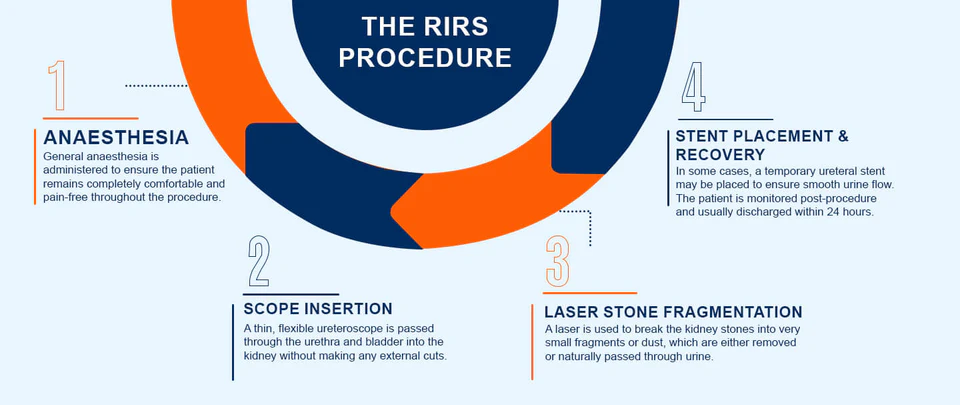
Laser stone removal is done under spinal or short general anaesthesia, so you feel no pain during the procedure. The urologist passes a slim telescope through the urine passage - no external cut is made - and locates the stone under camera vision. Depending on the stone's position, a semi-rigid ureteroscope (URSL) or a flexible scope (RIRS) is used.
A hair-thin holmium laser fibre is then advanced up to the stone and fired in controlled pulses, fragmenting it into dust and tiny pieces. Larger fragments are pulled out with a small basket; fine dust washes out with urine over the following days. The procedure typically takes 30-60 minutes depending on stone size and number.
In many cases a soft DJ stent is placed temporarily to keep the ureter open while it heals; it is removed in a short day-care visit after one to a few weeks. Most patients walk, eat and pass urine normally within hours and are discharged the same day or the next morning.
Why Axten
Every kidney stone removal (laser, no cuts) package includes your surgeon's fee, OT and anaesthesia charges, hospital stay, standard medicines and post-procedure follow-ups - quoted once, in writing, before you decide.
Share your reports on a free call. A specialist reviews your case the same day.
Receive one all-inclusive package price in writing - before you commit to anything.
Our insurance desk secures cashless approval and completes every formality.
A senior specialist operates at a partner hospital near you, on your scheduled date.
Free follow-up consultations and recovery monitoring until you are fully healed.
The Axten standard
For kidney stone removal (laser, no cuts), Axten focuses on the parts patients usually find stressful: confirming the right specialist, explaining the procedure clearly, locking the package price in writing and keeping recovery follow-ups organised.
Your case is reviewed for clinical fit before a date or package is suggested.
Surgeon, OT, anaesthesia, stay, standard medicines and follow-ups are itemised upfront.
Cashless eligibility, TPA paperwork and EMI options are checked before admission.
A care coordinator keeps follow-ups, reports and recovery instructions organised.
Free specialist consultation and an honest all-inclusive quote - no obligation.