Laser Anal Fissure Treatment

LaserSpecialist surgeons onlyCashless insuranceFree follow-ups
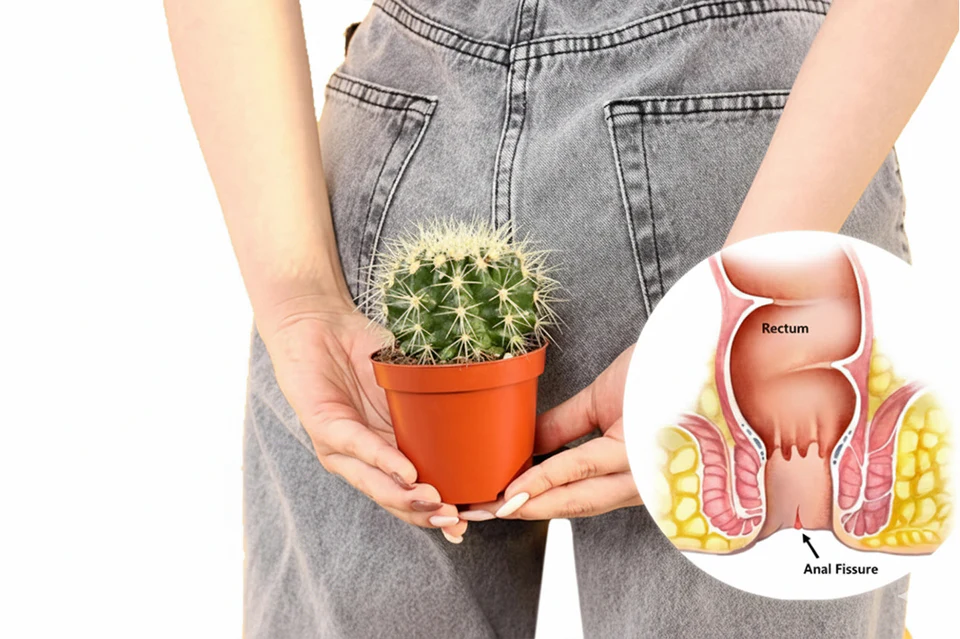
Illustration explaining an anal fissure
Anal Fissure Treatment - specialist-led treatment at Axten

An anal fissure is a small tear or crack in the delicate lining of the anal canal, most often caused by passing hard, constipated stools. The tear exposes sensitive tissue underneath, which is why fissures cause sharp, cutting pain during motion that can linger as a burning ache for hours afterwards, often with a streak of bright red blood.

The pain triggers a spasm of the internal anal sphincter muscle, which tightens the canal, reduces blood flow to the tear and prevents it from healing - creating a painful cycle. Fresh (acute) fissures often heal with diet changes and medicated creams, but a fissure lasting more than six to eight weeks becomes chronic, developing scarred edges and a skin tag, and usually needs a procedure.

At Axten Hospitals, chronic fissures are treated with precise laser sphincterotomy - a brief daycare procedure that relaxes the tight muscle so the tear can finally heal. You get specialist proctologists, one honest all-inclusive price, zero surprise billing, cashless insurance, 0% EMI and free follow-ups.

Honest all-inclusive price₹35,000 - ₹60,000 (all-inclusive, varies by chronicity & city)See full cost breakdown

Consult for Anal Fissure Treatment

Share your details - a care coordinator calls you back within minutes.

Country code +91 selected.

100% confidential · No spam · Honest all-inclusive quotes

Symptoms of Anal Fissure

  • Sharp, cutting pain while passing stool
  • Burning or throbbing pain lasting minutes to hours after motion
  • Bright red blood on the stool or toilet paper
  • A visible crack or tear at the anal opening
  • A small skin tag (sentinel pile) near the fissure in chronic cases
  • Fear of going to the toilet, which worsens constipation
  • Itching or irritation around the anus

Risks of delaying treatment

  • An acute fissure can become chronic with scarred edges that no longer heal with creams
  • Ongoing pain leads to toilet avoidance, worsening constipation and deepening the tear
  • The fissure base can get infected, forming an abscess or even a fistula tract
  • Months of pain and bleeding significantly affect work, sleep and quality of life

How is anal fissure diagnosed?

An anal fissure is usually diagnosed by history and gentle visual inspection alone - the tear is typically visible when the doctor softly parts the skin at the anal opening. Because the area is tender, a full internal examination is often deferred until the pain settles or done under anaesthesia if a procedure is planned.

Chronic fissures show characteristic features: firm edges, an external skin tag and sometimes a visible band of the internal sphincter at the base. Fissures in unusual positions, or those that fail to heal, may prompt tests to rule out conditions such as inflammatory bowel disease or infection. Axten specialists explain every finding clearly before recommending treatment.

Benefits of laser treatment

  • Precise laser energy relaxes the tight sphincter with minimal tissue damage
  • Quick daycare procedure - home the same day in most cases
  • Dramatic pain relief, often within the first few days
  • Faster healing than long-term creams for chronic fissures
  • Very low risk of incontinence in experienced specialist hands
  • High cure rates with low chance of the fissure returning

Types of anal fissure treatment

Non-surgical options

  • High-fibre diet, fluids and stool softeners - soften motions so the tear can rest and heal.
  • Warm sitz baths - relax the sphincter and improve local blood flow several times daily.
  • Medicated ointments (calcium channel blocker or nitrate creams) - chemically relax the sphincter muscle to promote healing.
  • Botulinum toxin injection - temporarily relaxes the sphincter for fissures resistant to creams.

Surgical & procedural options

  • Laser sphincterotomy - laser energy precisely relaxes a small band of the internal sphincter with minimal cutting.
  • Lateral internal sphincterotomy (LIS) - a tiny controlled division of the internal sphincter, the traditional gold standard.
  • Fissurectomy - trimming of scarred fissure edges and skin tags to encourage fresh healing, often combined with sphincter relaxation.
Anal fissure treatment process
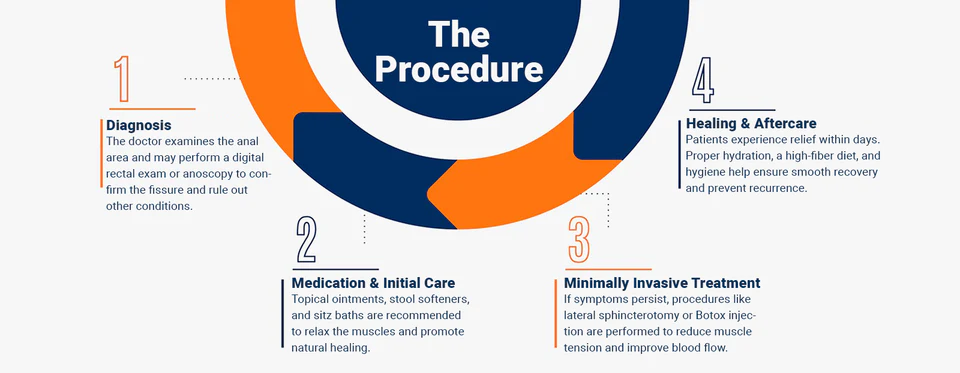
How anal fissure treatment is performed

How the procedure is performed

Laser fissure surgery is performed under short spinal or general anaesthesia and takes only 15 to 25 minutes. The surgeon uses a fine laser fibre to release a small, precisely measured portion of the tight internal sphincter muscle - the root cause that stops a chronic fissure from healing. Any scarred fissure edges or sentinel skin tag can be tidied in the same sitting.

Because the laser works with pinpoint accuracy and seals tissue as it works, there is minimal bleeding, no significant wound and far less discomfort than conventional techniques. The relaxed sphincter immediately improves blood supply to the fissure, allowing it to heal naturally over the following weeks.

Patients walk within hours and almost all go home the same day. Your Axten care coordinator handles admission and discharge paperwork, and free follow-up visits are scheduled to confirm the fissure has healed completely.

Recovery & aftercare

  • Most patients return to normal routine within 2 to 3 days
  • Continue warm sitz baths two to three times a day for the first two weeks
  • Keep stools soft with a fibre-rich diet, plenty of water and prescribed laxatives
  • Do not strain or sit on the toilet for prolonged periods
  • Expect the first few motions to be mildly uncomfortable - this settles quickly
  • Attend your free Axten follow-up so the surgeon can confirm full healing
Recovery and aftercare following anal fissure treatment
Recovery after anal fissure treatment

Why Axten

Care that doesn't stop at the operating table

Every anal fissure treatment package includes your surgeon's fee, OT and anaesthesia charges, hospital stay, standard medicines and post-procedure follow-ups - quoted once, in writing, before you decide.

  1. Talk with our experts

    Share your reports on a free call. A specialist reviews your case the same day.

  2. Honest fixed quote

    Receive one all-inclusive package price in writing - before you commit to anything.

  3. Insurance & paperwork

    Our insurance desk secures cashless approval and completes every formality.

  4. Your procedure

    A senior specialist operates at a partner hospital near you, on your scheduled date.

  5. Recovery & follow-ups

    Free follow-up consultations and recovery monitoring until you are fully healed.

The Axten standard

Why patients choose Axten for anal fissure treatment

For anal fissure treatment, Axten focuses on the parts patients usually find stressful: confirming the right specialist, explaining the procedure clearly, locking the package price in writing and keeping recovery follow-ups organised.

NABHstandard partner hospitals
100%written package quotes
24x7care helpline access

Senior surgeon review

Your case is reviewed for clinical fit before a date or package is suggested.
One written package

Surgeon, OT, anaesthesia, stay, standard medicines and follow-ups are itemised upfront.

Insurance handled early

Cashless eligibility, TPA paperwork and EMI options are checked before admission.

Coordinator-led recovery

A care coordinator keeps follow-ups, reports and recovery instructions organised.

FAQs about anal fissure treatment

Can an anal fissure heal on its own?

Fresh, acute fissures often heal within a few weeks if stools are kept soft with a high-fibre diet, plenty of water and stool softeners, along with sitz baths and prescribed ointments. However, a fissure persisting beyond six to eight weeks becomes chronic and rarely heals with creams alone - that is when a short laser procedure gives lasting relief.

Is laser fissure treatment painful?

The procedure is done under anaesthesia, so you feel nothing during it. Afterwards, most patients notice that the severe fissure pain they lived with is dramatically reduced within days, because the muscle spasm driving the pain is released. Mild soreness for a few days is normal and is easily managed with simple painkillers and sitz baths.

What is the difference between a fissure and piles?

A fissure is a tear in the anal lining that causes sharp pain during and after passing stool, with small streaks of bright blood. Piles are swollen blood vessels that usually cause painless bleeding and a lump. The two can coexist. A brief examination by an Axten proctologist confirms the exact diagnosis so you get the right treatment.

How much does laser fissure surgery cost in India?

At Axten Hospitals, laser fissure treatment typically costs ₹35,000 to ₹60,000 depending on chronicity and city. The price is honest and all-inclusive - surgeon fees, laser, anaesthesia, room, medicines and follow-up visits - with zero surprise billing. Cashless insurance and 0% EMI plans are available. Call 8156-92-92-92 for an exact personalised quote.

Will I lose control of motions after sphincterotomy?

When performed by specialist colorectal surgeons, the risk is very small. Only a tiny, carefully measured portion of the internal sphincter is relaxed - enough to break the spasm, not enough to affect control. Laser precision reduces this risk further. Temporary minor leakage of gas can occur in the early weeks and almost always resolves fully.

How long does a fissure take to heal after laser treatment?

Pain relief is usually felt within the first week, and the fissure itself typically heals over three to six weeks as blood supply returns to the area. You can resume work within a couple of days. Keeping stools soft during this period is essential, and your free Axten follow-up visits confirm the tear has closed completely.

Why does my fissure keep coming back?

Recurrent fissures usually mean the underlying causes - chronic constipation, straining and a persistently tight sphincter - were never fully addressed. Creams heal the surface but do not correct the muscle spasm. A laser sphincterotomy treats the root cause, and combining it with lifelong fibre-rich eating habits gives the best protection against recurrence.

Do I need admission for fissure surgery?

No lengthy admission is needed. Laser fissure surgery is a daycare procedure at Axten Hospitals - you are admitted in the morning, operated within hours, and usually discharged the same evening once you have passed urine and are walking comfortably. Your dedicated care coordinator manages all the paperwork, including cashless insurance pre-authorisation.

Ready to discuss anal fissure treatment?

Free specialist consultation and an honest all-inclusive quote - no obligation.